top of page

Dahab
دهب
20.01.2026 - 01:52 - Dahab
My NS train failed, so when on the brink of Schiphol it decided to turn back to Rotterdam Centraal, Niek had to pick me up at the station and he drove me again to Schiphol. I barely made it to the plane. I still can’t believe it’s possible to get on a plane even after arriving at the airport 20 mins before the gate closes.
On the plane: I read from Niel’s analysis of Rohmer's Conte d’été. Read about Cairo & Egypt too, and had a chat with the elderly woman sitting next to me. She's Polish and married to her Rotterdammer husband for many years. She recommended me places in Egypt.
Close to landing at Sharm El Sheikh, South Sinai landscape almost looked like it was another planet. I'm not used to a sight like this. Jagged ridges of the arid desert looked so sharp. Smooth parts are wadis, as we say vadi in Turkish. Landing into this golden light was beautiful; it was hazy, yellow, orange. The sweet Polish woman saw my excitement and told her husband to move, so that I can make photos from the window of the plane.


Dahab is a seaside town along the bay. It was a small Bedouin coastal settlement, town grew around Al-Assalah. It's about 1,5 hours by taxi from the airport.
Alizé and I were walking around the town in the evening and I gathered my first impressions. Lighthouse area is the main promenade, with cafes, shisha spots with TV mounted on the wall, playing soap operas or football matches, and people are talking and smoking and watching and eating. So many diving centers everywhere. Mashraba is the town area. Lagoon is where the windsurf is.
Now Alizé’s cat Nora is purring on my bed as I am writing this. She curiously leaned on my journal and I almost wanted to stop the cat from reading my private notes.


Pick-up trucks are taxis. In front of Alizé's diving center a handsome young man stopped me, pointing at his friend he said "My friend says you look like Timothée Chalamet." I laughed because I think I look nothing like him. Schools are on a break, so about 7-8 friends came from Cairo to have some fun here. We added each other on instagram and they took a photo with me.
With Mody too, we went for Lebanese for dinner. Soujuk with pomegranate molasses, baba ghanoush, fried kibbeh.
Dahab means gold. Mody says it's because of the golden sands and the golden light. Basically the light I landed into today.


South Sinai is of course exceptionally politically charged. Israel occupied it after the 1967 war. Was returned to Egypt in April 1982. That return happened 10 years before I even existed. Anyway, so I totally feel state presence, state security type of feeling here.
Early 90s it got popular with tourists.
In 2006 there were three bomb attacks here. 24 people were killed, 80 injured.
You can see the outline of the Saudi Arabia hills from the shore.

Sand was probably poured to make a temporary ramp. I see the cement bags. Rebar is sticking out here and there. I like this sight because I fantasize about sand gathering on the steps over time with the wind. It intrigues me how the steps lose meaning to the sand. It also gives me an Escher-esque distance to look at this, yet it's so close; I like the feeling that I can actually just jump a wall and walk those steps.
20.01.2026 - 18:55 - Dahab
Alizé went to get a haircut after breakfast. So I explored the town solo a bit.


Shop owners shout at me and ask me to look at the stuff they sell. A guy says: "Where are you from sir? You look elegant." In my shirt and black pants I am totally overdressed for Dahab. People look ready to swim any minute. Hairs look salty, everyone is tanned; the cafe owner makes a joke to Alizé about how white I look.


I would send so many letters and cards just for the sake of the beauty of this post box.


Alizé and I drive to Nuweibaa. She wants to show me the camp ground where she will throw her 30th birthday party.
The road cuts through stunning mountain landscapes. We pass by multiple check points. Alizé is never stopped, probably because she is so cute.
After an hour of drive, we arrive at the small town. We pass the coptic church next to a mosque.


Finding the camp ground is not easy. Somewhere remote towards the water we stop next to three kids. Alizé asks them the address in Arabic. The girl is a few years older than the two boys, she might be 12 or 13, and she is tightly hugging her sketch book with the drawing of a girl on it. She doesn't speak; the boys tell Alizé where to go.
Hearing them speak in Arabic, I discreetly look at the coloured drawing the little girl made. I wish I had drawing materials in my bag to give her. One of my Faber Castell sets, a good sketch book, some paint. They all look so sweet, why don't I even have chocolate in this bag? Why don't I carry stuff that I can gift to other people at all times? I call for the girl from the lowered car window and gift her one of my Muji pens. I hope she keeps drawing and painting.
Before we arrive at the camp ground, Alizé makes photos of me with the camels.


The camp ground is stunning. Amr left his banking job, bought this land, and built everything. Sinai Mountains on one side, the sea on the other. Vast feeling.
We are offered mountain sage -marmaraya- tea.
Nuweibaa is one of the Egypt-Jordan crossings.
Amr shows us around. I breathe; taking in the smells and the space.
I'm fascinated by the menjomini trees, moraceae, very durable, survives salt water, evergreen.


The drive back home with Alizé in golden hour is so nice.


Omar, Andrea, Fanny, and Khalil join us for dinner. Fanny’s new dog Maya is here too. My first time having mulukhiyah from jute. Everyone seems to have a relation to diving here, and there is a diving lingo with a lot of abbreviations that I don't know anything about, but OWD, IDC, CMAS are flying around in every conversation and I ask Alizé what all these STDs and PTSDs mean.
They recommend me all kinds of places to see when I'm in Cairo, and food to eat, but I am so unfamiliar with the language that I have no chance of even imagining how their recommendations are written. Koshari Abu Tarekh? Wedat Beirut? Khan el kalili? Al muz al azhar?
My kitty Nora sleeps with me, she is cuddly, warm, and purrs all the time.

We will see if we can dive tomorrow. It’s really lovely to be here.
G.H.’s last cover design might be ready soon. I still can’t believe it. Oh and I still need to change things and integrate stuff. And there will be a lot of editing to finalize.
IFFR and Nepal are so soon already.


Early morning we go to Alizé's diving school. We quickly notice that it's too windy today. It wouldn't really be a problem for diving, but since it's my first time, tomorrow's calmer water feels easier.
Alizé gave me the theory lesson. She's an amazing teacher, and she makes Freudian slips while drawing what's supposed to be an ear. There's so much to learn about diving, I try to keep in mind the essentials that are immediately useful to me. There are so many gears and tools, so many diving locations, different depths, different challenges in each spot. A system of certificate authorizes a person to do certain dives. I feel excited, and I totally understand what made Alizé so enthusiastic about diving years ago. I can't wait to dive tomorrow!!!! I thought I was scared, but now I feel impatient because of today's wind.
But it's fine, now there is more time to chill and explore the town.
I find these doors that I want to go through:


On the streets, people are always sweeping the front of their shops. Cleaning the floors, or gardens, foyers; with water or dry.
Boys shout at me on their bikes in Arabic, I don't know if they are telling me to get the fuck out of their way, I just smile back.
Men are tall here, and everyone is so beautiful.
They mostly listen to Arabic/local music. I hear Sabry Aalil - Sherine, Al Bint El Chalabeya - Dorsaf Hamdani.


Nora loves to bite and knead my ass.
After dinner with Jasmine we drop by Andrea's. Then Alizé and I walk by the shore of Eel Garden, and get some juice from the famous Dahab juice guy. We study the coral reefs a bit, and the fish we might see down there.


We start the day super early the next morning.
Alizé gets some coffee, we wake up more by the water, then go to the diving school to gear up and refresh information.


When we begin descending in water, my ears have a bit of a hard time equalizing; we take quite some time to let my ears adapt to each new level of pressure. But once we are 10 meters deep and my ears feel fine, I begin to enjoy it a lot.
The coral reef in the area is beautiful, all the textures and colours of the stony and soft ones, paramuricea, turbinaria, lobophyllia, juncella, acropora. Different types of corals belong to different depths. Some on the reef plate, some on the slope. And the fish: the moray, the goby, toadfish, moustache conger, reef cusk eel, pineapplefish, crown squirrel, spotted shrimpfish, vermilion hind, sixstriped soapfish, crescent-tail bigeye, cardinalfish, butterflyfish, red-striped hogfish.


I didn't notice how tiring diving can be until we resurfaced and walked back to the diving school to clean our gear. I was trying to remember everything I saw.
We went for some food. The quiet, kind man in his 30s seemed to have a permanent frown on his face and a tough attitude. His food was delicious. We sat on pillows on the floor and took our time to relax and eat. We saw some goats on the street on the way back home.
I watched men enjoy the water. At home Alizé and I relaxed, I read on the terrace.


I love doors and archways opening to the sea.


23.01.2026
Mohamed is driving me to Cairo. A six-hour drive through the mountains.
Check points would demand money if they think he is transporting a foreigner. So I am now a colleague of him from Dubai and I am an accountant.
At the check points they look at my Dutch passport for a minute and then ask me where I'm from. I say Turkey, then they see me as a brother. I'm not sure if they can't read the Latin alphabet, just as I can't read the Arabic, or perhaps they know the Netherlands as Holland and can't make sense of what this Netherlands place is written on my passport.


Mohamed says that Suez Canal was built by a Turkish guy called İsmail. He means İsmail Paşa that became the ruler in 1863, who is associated with the canal since it was completed and inaugurated during his time. Egypt was an Ottoman province of course. Egyptians worked in forced labour, and so much digging was done manually. Many people died from cholera and other diseases, and they worked under really brutal conditions. The scale of its human cost is shocking. To build this canal, about 60 to 120 thousand people died.
Mohamed says Indian cinema is really popular in Egypt. They also love American films.
Since we're heading to Cairo, I of course had to think of The Yacoubian Building too.
While he took a toilet break, I saw the news about Egyptians preparing to welcome Amshir, the sixth month of the Coptic calendar, a period of major weather fluctuations. So basically from February 8 on, lasting 30 days, end of the peak cold wave, the month of Tuba ends and brings strong winds and storms. A lot of dust will be raised. Farmers apparently love Amshir, as it makes the crops thrive.
Mohamed is listening to Amr Diab - Inta El Haz, and he is telling me how he didn't do military service because he is the only son in the family. Sisters don't count. In Egypt, only if there is more than one son in the family do they serve in the military.


Ahmad Hamdy North Tunnel under the sea.
Then we exit to the city called Suez.
Under the geneva bridge someone was praying on the ground.
The sun was like an orange hanging in the sky. It looked so soft, docile. I loved this submissive sun. I could stare at it and its gradients all I want, I didn't even flinch. It was massive. Like a warm yellow hole opened up in the sky.
Soon enough we'd arrive in Cairo.
Cairo
القاهرة

That water is the Nile.


Mohamed dropped me at my hotel.
I wanted to enjoy the evening, so I quickly went out after dropping my stuff.
I wasn't aware Friday is the main weekend day here. The streets were packed with people. On each big street there were these places with a TV set outside and tables around it, where people were playing games while watching football.
I passed by a bookshop and loved the cover designs, the variety in Arabic fonts, the ways in which those letters can be used with images, a few of the designs felt effortlessly timeless. I remember really loving that quiet moment I had by the bookshop window just looking in.
Then the intense traffic of Cairo extended its noise and movements from all corners to wrap me up. I lived in Istanbul for many years, yet the traffic of Cairo managed to shock me and make me think this is absolutely crazy.
I was feeling the thrill of unfamiliarity, the scariness of it too, so I was a bit unnerved at first. Crossing the streets felt dangerous, the chaos, the noise was overwhelming. I wasn't feeling sure I was safe; I was alert. I tried to take quieter paths as I made my way for dinner.


I went to the koshary place Abou Tarek. Koshary is like a comfort food. Mix of pasta, fried rice, brown lentils, chickpeas, tomato sauce. They sat me at a table with three high school students first, we talked about the school break and how they are spending it.
Then the waiter proposed me an empty table, so I moved. Soon after my koshary arrived, the waiter sat two handsome guys on my table. They had big travel backpacks and they looked like they just arrived from somewhere far. We smiled at each other as they joined my table. From their accent I figured they were from the US. So we began to chat and that's how I met Gavin and Arion. They've been traveling the world for months now. They've even been to Nepal, so they gave me their recommendations for Kathmandu. They would leave Egypt the next day, we exchanged contacts. Gavin even wanted to pay for my koshary but I objected, although it was very sweet.
This interaction with them, as well as the small chat I had with the high school boys and the funny waiters, made me feel a bit more at ease with where I was. So when I stepped outside I felt less scared, and began exploring more attentively and making photos. I was suddenly able to notice more, especially with architecture, the run-down neoclassical buildings that felt so Cairo-specific in their worn-outness.


Café Riche
مقهى ريش

Something happens to me when I travel. I tap into a part of myself that's different than usual, or maybe a heightened version of how I always move.
People who are meant to find me come find me. And I find them.
I had read about Café Riche in Naguib Mahfouz's memoirs, so when I felt the need to be somewhere somewhat familiar, I made a turn from the Tahrir Square and headed to the 17 Talaat Harb street.
I began photographing the beautiful front door of this intellectual landmark of Cairo, a hub for writers, artists, revolutionaries for many decades now. I noticed a few people inside. Then one of them looked at me; one of the most beautiful women I've ever seen in my life, and with a warm smile and a very clear, determined hand movement, she gestured me to come in.


I sat at a table near them, timid but wide-open hearted, my most frequent mood. I ordered a beer and began taking in the space.
Then the woman and her friend began dancing by the door. I watched them for a bit.
They must have felt it wasn't enough space. On their way through the big door to the other room, she turned to me and said: "Come, join us!"
I grabbed my bear and followed her.

I gave Nermeen a handshake and she said "Oh, that was very firm. A little softer please."
We began dancing. While teaching me the steps, she told me about the history of the swing dance, the 20s and 30s dance jazz, improvisation, call and response. Creativity and joy in times of segregation. It was resistance, and it also influenced the modern pop culture.
This is what the artists Nermeen, Daniele, Mostafa and I did the first time we met, swing dancing for a few hours.


What also played was: El Helwa Di - Oumeima El Khalil and Qadukka Al Mayyas - Yasmina Ramia.
Mostafa told me that the motorbike that's parked outside is his. I made a photo of his bike. I of course didn't know that I would be spending the next few days on this very motorbike all around Cairo.


Mostafa offered to drop me at the hotel, but I wanted to walk. On the way to the hotel I saw that the university students on a break that I met in Dahab (who thought I looked like Timothée Chalamet) sent me a cute video.

Early morning I took a walk in the neighborhood before meeting Omar.


I'm in the car, heading to Giza with Soubhi and Omar.
Omar says many Egyptians revere the king Mohammad Ali Pasha. A foundational modernizer. They see him as a founder of modern Egypt. But of course his rule also meant extraction of huge labour and resources from the Egyptians for his projects and power.
I tell him how once Victoria and I stayed at the Paris house of Sultan Touran Ibrahim Rateb; an Ottoman prince, who was born in 1950 in Cairo, Giza. A number of Ottoman dynasty families were settled in Egypt before the 1952 revolution.
We pass Nile to Giza, the west.


Omar talks about how the Egyptian history is 7 or 10 thousand years old with their culture and religion, and Islam is only 1400. He then says "No doubt that Islam would prove very successful."
I feel intrigued with the prospect of an interesting perspective, so I ask him if he considers himself Arab or Egyptian.
"Of course Egyptian! Egyptians are different people than Arabs!"
I feel even more intrigued.
Then in another conversation a few hours later, he shares sentiments with a full embrace and identification with Islam and the Arab culture.
I think about how he holds all those at the same time.


Omar says obelisks were designed because in the middle period and new kingdom they have lost the knowledge of building pyramids. The architectural/constructural plan of the pyramids was a privately guarded knowledge, so when it was lost, they went for the easier structure of an obelisk.
I'm lucky with my timing; the shuttle buses that help navigate this massive area are here only since 4-5 months. All the roads were packed with people's personal cars before. And the new museum is open only since November. It apparently took 25 years to build.
Omar says 4th and the 18th dynasties were the most powerful. 4th were the ones who got the pyramids and the buried solar boats.


River Nile gave life to these lands. Roughly 95 percent of people in Egypt live around the river delta and the narrow valley strip. Only 5 percent live outside the Nile belt, and they are spread across the deserts and coastal parts of the Sinai Peninsula.
I feel like Sydney Fox's assistant Nigel, on a mission to stop relic hunters.
We go to the Grand Egyptian Museum.
Omar says: "You have a sexy face. We make advertisement for my company okay? You have cinematic face."
But when I say I'm 33 he says "You are old man! Why don't you have a girlfriend? European girls love Turkish men!"
I want to say European boys too, but I don't want to make it awkward.


The museum is massive. It has thousands of employees.
The abundance of their artifacts shows ancient Egyptian culture's appreciation for art, craft, sculpture, image, symbols. I'm so impressed by everything they created that defied thousands of years of worldly impacts. And even though so much of their artifacts are stolen and scattered across the world, there was still an incredibly large collection here in this museum. It would take weeks to see everything. What a prolific society. And their skills were truly impressive.


This was perhaps the grand piece of the Grand Egyptian Museum. Tutankhamun's gold funerary mask from his burial in Valley of the Kings.
It was discovered sitting over the head and shoulders of the mummy. The blue-gold stripes is the classic royal headcloth. The cobra and vulture are protectors, while symbolising lower and upper Egypt. The long braided beard is a nod to Osiris, god of the dead. The colours on the mask are not paint, they are inlays of stones like lapis, or glass, and some pastes, all set into gold.
There was a queue to take a photo of the mask up close.

This is the dagger of Tutankhamun, and the blade was made from meteoritic iron. It has about 11 percent nickel and cobalt, which matches iron meteorites, so it is very likely that it's made out of something of extraterrestrial origin. It's mesmerising to look at it and to think the immeasurable distances it must have traveled in space before landing on earth and being made into a king's dagger.


This is the Egyptian Harpocrates from the late Roman period. The museum description says: "Although shown with the childlike gesture of putting a finger to his mouth, Harpocrates (Horus the Child) was believed to have strong magical power. He protected worshippers from evil spirits and dangerous animals."
The child god who survives danger, raised under the care of Isis after the murder of Osiris, and destined to confront Set. He embodies the idea that the vulnerable can be guarded, cured, made triumphant.
I have a few childhood photos with that gesture.
I think about objects of magical protection. How the adjustment of gestures, movements, intentions, rhythms, thoughts they create on the protected person's body make their magic actually work.


I don't mean to laugh but why was the Greco-Roman Egypt period like this? It looks AI.

أنا رجعت القاهرة
Back in Cairo


What do I like here? I like the green. The typography. The framed text in Arabic. The abundance of so many types of stuff. I romanticise the old box-TV, I love to see it actually turned on, I try to hear its sound, I love the image behind the visibly reflective glass screen. I like the handsome man, Mohamed, and I like his funny boss, maybe his father. This is some kind of a car parts repair shop.


I turn a corner and I'm lured by the sunlight falling on the ground so invitingly.
To the left I see a cabinet maker, maybe a non-glamorous antique dealer, they are discussing something among the old cabinets and one of them sends the young man to run an errand.
From the house next to me I hear pans and pots, someone is busy in the kitchen.
It's 3 pm and a man comes out of the door carrying two rolled-up carpets on his shoulder.
I want to thank the door for the red.


The small balcony has two worn-out chairs facing each other. I love the cozy they invite. I want to sit there with my aunties and listen to them talk politics, family gossip, recipes, or reminiscing. I want one of the aunties to offer me chocolate cake, and I want to fall asleep there during the golden hour.


I like his little corner. I like the wooden panel that makes his space separated from the street, makes it safe and snug behind it. I like that he can sit there almost reclining a bit. He is watching television. He didn't even open the shutters fully. What does he do there, maybe nothing?


He's doing his carpentry work with his sharp and strong tool that can easily chop a finger off. But he put an eye of nazar on the machine, so it wards off the unlucky energies and protects him.


This grandma just scolded three of her granddaughters. I think for coming home later than appropriate. She had the universal exasperated grandma attitude that I instantly recognised. She then proceeded to collect dry laundry.
Thanks for bringing texture and colour to the street with your construction drapes, instead of that ugly standard construction drape with the depressing plastic.


As I look at what fascinates me about the city, I know that some of this is poverty, and neglect, and source of frustration with the governance, history, tradition, future. But I am grateful for cities where every single corner and gap is not yet gentrified. Where I can find public seclusion in cryptical corners that don't make any sense at first glance, or never at all. I'm grateful for accumulation, dust, wear. I'm grateful for not pretending we do not exist and we do not live.


I hopped on Mostafa's bike not knowing where we're heading. I thought it'd take 15 min. max, but we ended up driving around for an hour.
The traffic is so horrifying that I think maybe this is the end.
But the strange thing is, even though it looks more chaotic than Istanbul, the traffic here does not seem to jam that much. It keeps flowing in that impossible arrangement between all vehicles, getting centimeters close to each other and constantly filling each available gap.
On some roads they didn't even bother with lanes; there's actually just one lane and that is the entire road. Even on roads with lanes, the white lines seem to be there just as a suggestion.
Road rage of course exists, but not in the ways one would expect. The tolerance of outrage is so high that it's often just a stubborn honk, and maybe a little shout; that's it. Turkish people would turn these roads into bloodbath with their traffic temper.
As Mostafa expertly drives, I can't help but tighten my arms and legs around him, and he laughs at me. It's like playing GTA and I never know if we're just going to hit a pedestrian like they're some kind of NPC. When Mostafa nonchalantly shows me buildings and monuments or makes fun of the way I scream bismillah with the crazy turn of a massive bus, I want to grab him by the head and say MOSTAFA PAY ATTENTION!
But it wasn't long before I got used to it and relaxed, and even found myself wanting to honk left and right, telling people to get out of our way, and making photos and videos with the wind in my hair. I feel calm enough to observe as we go. I see aunties in long dresses carrying big objects on their heads along the road. I see a woman on a window talking on the phone with a flirtatious expression, her eyes are beautifully lined. We pass by the National Archives of Egypt and the Civilisation Museum.
We arrive at the Foustat Pottery Village of Old Cairo. The sculpture of a big octopus blocks our path.
I notice here that Egyptians also say "Hoşşşşt" to dogs they want to shoo.


Mostafa says he looked at my website, and loved the glass hammer figure that shows up in my work. He is a glass artist, so I ask him if he thinks a glass hammer is easy to make. He enthusiastically says yes, it should be easy to make in glass. From the way he speaks about my work, I can tell he really paid attention and looked at things with keen detail.
We drive to a small cove on the Nile to rent a sailboat to enjoy the sunset floating on the river.


We're back on the bike, heading to the bookstore and gallery Falak, to see Daniele's exhibition there.
Mostafa buys a work of Daniele for me, the one with people dancing by the moonlight. I also buy a print.
We leave. On the way to eat hawawshi, holding on to Mostafa on the back of the bike, I notice how I got used to this, and passing by the Tahrir Square now feels so familiar, it's our Tahrir Square. And the traffic is a haze of colour, light, shape, and all kinds of sharp and startling noise.
At the hawawshi place I tell Mostafa that I've been listening to Souad Massi's Oumniya these days. He says "Ah yeah, she makes raï music. It's a kind of Algerian music, from the West Algeria. I think you will like that kind of music because you are a very calm person."


We head to Cap d'Or to listen to jazz. The cucumber and bean snacks they bring with the drinks is unusual for me, but I love it.


Late at night I feel sleepy and tired. But I want to wake up early and discover other parts of the city in the morning.


ماذا تفعل بهذا الشيء في يدك؟-
-Oh I'm sorry, I don't speak Arabic.
-What are you doing?
-I'm scanning. This is a scanner. It makes photos.
-(Confused stare)
-I'm an artist.
-You are a movie artist?


Young boy on the other side of the Hamam Beshtk Street:
-Hey welcome!
-Thank you!
-What is your name?
-Mayıs! And you?
-Farouk!
-Nice to meet you!
Farouk gestures me goodbye, and I feel thankful for the fact that he made me shout my name on the Hamam Beshtk Street.


Thank you for the blue.


Thank you, şükran.
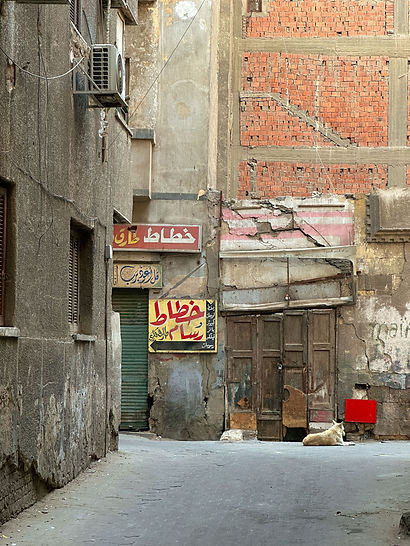

I don't know what it says, but it works, it makes me want to take that turn.


I like that it's possible to use that entrance of that mosque to pile up and sell eish bread. I somehow can't imagine this being possible in Turkey.

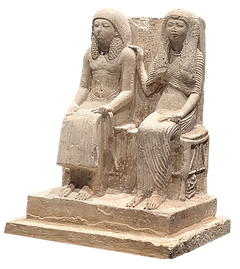
I like being outside, looking in.


Thank you for letting the light in.


Even though I saw interesting stuff, I still spent too much time at a touristic quarter, so I feel overwhelmed.
Mostafa comes right on time with his bike.
We first go to the El-Hakim mosque to sit and rest on its soft carpeted floor.
There we try to make a list of words that Turkish and Arabic have in common:
Tamam, hesap, çanta, mahkeme. Hoşt, meze. Kitap, fikir-fıkra, çekiç-jekuj, zımpara-samfara, tulumba, tabur, tuz-tız, köprü-kobri, lamba, terzi, gümrük, tırabzan-tarabzin, boya-buya, ıslahat, delil, cesaret-gasara, cevap-jevab, cümle-gumla, dünya-dunya, fayda-faida, garip, hikâye, ressam-ressem, sürat-surat, dükkan-dukkan, saat-sa'at, sahil-sehel, efendim?, aferin-afarim, daire, taze, şifre.
We head back to the center to eat Egyptian style pizza.


We drive to the road rising up to the mountain where there is a stunning view of the city. We watch the sunset there.
We take a different route back down. Then have delicious tea at the cafe where Bakkar is working.
Bakkar's shift ends, so the three of us get on the motorbike and drive to some galleries to see exhibitions. We share our thoughts on the works we see.


I feel grateful for everyone I crossed paths with.
Goodbye Mostafa! Nermeen, Daniele, Bakkar, Ruto, Yahya! Alizé, Mody, Nora, Andrea, Omar, Khalil, Fanny, the corals and the fish! Goodbye ancient gods and kings, goodbye Nile, goodbye Sinai, goats, camels and the sea!

bottom of page